

Creating an NFT Marketing collection is the easy part. Getting collectors to notice it, trust it, and buy it — before, during, and after launch — is where most projects fail.
The NFT market in 2026 is not the one from 2021. Collectors are more discerning. Wallets have been burned by overpromised roadmaps too many times. Communities have learned to distinguish genuine projects from pure speculation. In this environment, NFT marketing is not a set of hype tactics applied at launch. It is a sustained, multi-channel discipline that determines whether a collection builds real cultural value or mints out and disappears.
This guide covers everything — how to build an NFT marketing strategy from scratch, which channels work for marketing NFT collections in 2026, how NFT SEO builds long-term organic discovery, what NFT advertising looks like on crypto-native networks, and how post-mint community management turns one-time buyers into long-term advocates.
Whether you are an independent artist launching your first collection or an established Web3 brand scaling an existing project, this is the step-by-step framework that works.
What Is NFT Marketing?
NFT marketing is the process of promoting non-fungible tokens—digital assets built on blockchain—to attract buyers, collectors, and long-term community members. It combines traditional digital marketing principles (SEO, content, paid ads) with Web3-native tactics like Discord community building, whitelist campaigns, and on-chain storytelling.
Unlike marketing a SaaS product or e-commerce store, NFT marketing relies heavily on trust, scarcity, and narrative. Buyers aren’t just purchasing a JPEG—they’re buying into a vision, a community, and a brand identity that lives permanently on the blockchain.
Whether you’re a digital artist launching your first collection or a Web3 brand rolling out a utility-driven PFP project, having a clear nft marketing strategy is the single biggest differentiator between a sold-out mint and a silent failure.
Why NFT Marketing Is Different from Traditional Marketing
Before building your strategy, it’s critical to understand what makes marketing NFT projects uniquely challenging:
- Compressed timelines: NFT launches often build hype over days or weeks, not months.
- Community-first culture: The Web3 audience is skeptical of overly corporate messaging. Authenticity wins.
- Decentralized discovery: Buyers find projects through Twitter/X threads, Discord alpha calls, OpenSea search, and influencer word-of-mouth—not Google Ads alone.
- Post-mint retention: The project doesn’t end at mint. Floor price, roadmap delivery, and community health define long-term success.
- Volatility: Market sentiment in crypto/NFTs can shift overnight, making agile marketing essential.
Understanding these dynamics shapes every decision in your nft marketing strategy.
Building Your NFT Marketing Strategy: Step-by-Step
Step 1: Define Your Unique Value Proposition (UVP)
Before writing a single tweet, answer these questions:
- What makes your NFT collection different? Utility? Art style? Lore? Real-world benefits?
- Who is your target collector? Degens? Casual crypto users? Gamers? Brand loyalists?
- What story are you telling? Every successful project has a compelling narrative arc.
Your UVP is the foundation of all nft marketing and promotion efforts. Without it, your content will feel generic and forgettable.
Step 2: Build Your Brand Identity
Your brand identity includes:
- Collection name and logo
- Visual style and color palette (consistent across Twitter, Discord, and your website)
- Brand voice (playful, mysterious, luxurious, community-first?)
- Lore or backstory (character origin, universe, mythology)
Invest in this before going public. First impressions are permanent in Web3.
Step 3: Set Up Your Core Channels
Before any nft promotion service or paid push, build your owned channels:
| Channel | Purpose |
| Twitter/X | Real-time community engagement, alpha drops, viral reach |
| Discord | Deep community building, whitelist gating, AMAs |
| Website/Landing Page | SEO, legitimacy, mint hub |
| OpenSea/Blur/Magic Eden | Marketplace presence and organic discovery |
| Email List | Direct communication, immune to algorithm changes |
Step 4: Create a Pre-Launch Content Calendar
Content consistency builds trust. Plan for:
- Teaser content (blurred artwork, countdown timers)
- Team introductions (human faces build trust)
- Lore drops (story reveals keep people coming back)
- Whitelist mechanics (FCFS, raffles, OG roles)
- Collaborations and co-marketing with other Web3 projects
Step 5: Activate Influencers and KOLs
NFT influencers (Key Opinion Leaders or KOLs) have highly engaged, niche audiences. Prioritize:
- Micro-influencers (5K–100K followers) in your specific niche
- Alpha callers in Discord servers
- Twitter spaces hosts who cover NFT launches
- YouTube creators doing NFT reviews
Always verify engagement authenticity—follower counts are easily inflated in Web3.
Step 6: Launch and Sustain Post-Mint Momentum
Post-mint is where most projects die. Keep your community engaged with:
- Roadmap updates and milestone celebrations
- Holder-exclusive benefits (airdrops, token rewards, IRL events)
- Collabs and partnerships that add utility
- Regular AMAs with founders
- Burn mechanics or staking to maintain token scarcity and interest
Top NFT Marketing Channels
1. Twitter/X Marketing
Twitter/X is the heartbeat of the NFT world. Strategies that work:
- Post consistently (2–4x/day during launch phases)
- Use relevant hashtags: #NFT, #Web3, #NFTCommunity, #[YourCollectionName]
- Engage authentically in threads—don’t just post, respond and build relationships
- Run Spaces for AMAs, reveals, and community events
- Use pinned tweets as a hub for mint info and links
2. Discord Community Building
A thriving Discord is the #1 signal of a healthy project. Structure your server with:
- Announcements channel
- Art reveals and teasers
- Whitelist / OG roles with clear earning criteria
- General chat and holder-only channels
- Verification bot (Collab.Land or Guild.xyz)
- Events and AMAs
Moderation quality and response time directly impact community trust.
3. Content Marketing and Blogging
Long-form content builds organic authority. Write about:
- How your NFTs work and what they unlock
- Your creative process and inspiration
- The Web3 ecosystem and where your project fits
- Educational content for new collectors
This ties directly into NFT SEO, covered in the next section.
4. Influencer and KOL Partnerships
Beyond social posting, structure formal partnerships that include:
- Dedicated review threads
- Giveaway amplification
- Co-created content (Twitter Spaces, podcast appearances)
- Whitelist allocations for their community
5. NFT Marketplace Optimization
Your OpenSea or Magic Eden listing is a landing page. Optimize it with:
- Keyword-rich collection description
- High-quality banner and featured image
- Clear trait rarity documentation
- Links to your website and socials
NFT SEO: How to Rank and Get Discovered
NFT SEO is one of the most underutilized nft marketing strategies available. While the Web3 audience lives on Twitter and Discord, a massive segment of potential buyers still uses Google to discover, research, and validate projects.
NFT SEO Tactics That Work
On-Page SEO:
- Optimize your collection landing page with primary keywords like “buy [collection name] NFT,” “[collection name] whitelist,” and “mint [collection name]”
- Write a keyword-rich project description (300+ words) on your website
- Use schema markup for digital products where applicable
- Ensure mobile-first design and fast page load speeds
Content SEO:
- Publish regular blog posts targeting informational keywords (“what is [your NFT utility]?”)
- Create comparison content (“top NFT collections in [niche] 2026”)
- Build backlinks through guest posts on Web3 media (CoinTelegraph, Decrypt, NFT Evening)
Technical SEO:
- Submit your sitemap to Google Search Console
- Fix broken links before launch
- Optimize image alt text with descriptive, keyword-relevant language
Local/Brand SEO:
- Claim your Google Business Profile if you’re an agency or studio
- Keep NAP (Name, Address, Phone) consistent across directories
NFT Advertising: Paid Strategies That Work
NFT advertising via paid channels requires careful platform selection since major ad networks (Google, Meta) have historically restricted crypto/NFT ads. Here’s what works in 2026:
Approved and Effective NFT Ad Channels
| Platform | Ad Type | Notes |
| Twitter/X Ads | Promoted tweets, follower campaigns | Highly targeted to crypto audiences |
| Reddit Ads | Sponsored posts in r/NFT, r/CryptoCurrency | Strong engagement in niche communities |
| CoinZilla | Display and native ads | Crypto-native ad network |
| Cointraffic | Banner ads on crypto sites | Strong reach in DeFi/NFT audiences |
| YouTube (pre-roll) | Video ads | Effective for project storytelling |
| Brave Ads | Privacy-first display ads | Targets crypto-native browser users |
Retargeting Strategies
Use pixel-based retargeting to re-engage visitors who:
- Visited your mint page but didn’t connect their wallet
- Engaged with your Twitter content
- Clicked your Discord invite link
Even simple retargeting sequences can dramatically improve mint conversion rates.
Pre-Launch, Launch & Post-Mint: A Full Campaign Timeline
A complete NFT marketing strategy covers four distinct phases, each with different priorities, channels, and success metrics. Treating them as a single undifferentiated campaign is the most common mistake in NFT marketing.
Phase 1 — Story and Brand Foundation (8–12 Weeks Pre-Mint)
Before any channel is activated, the story has to work. What does this collection represent? Why does it exist? What does holding one of these NFTs mean to the holder — not in terms of traits or rarity, but in terms of identity, values, and belonging?
NFT collections that build lasting value have a compelling narrative at their core. The art style, the artist’s background, the world-building, the community culture — these elements combine into a story that collectors want to be part of. Marketing NFT projects without this foundation produces short-term hype and poor holder retention.
At this phase, the priorities are: defining the core narrative and visual identity, setting up the project website with clear utility and roadmap information, establishing social channels and Discord/Telegram infrastructure, and producing the foundational content — project lore, team introductions, art process documentation — that journalists and influencers will reference.
Phase 2 — Community and Whitelist Building (4–8 Weeks Pre-Mint)
With the brand foundation in place, the focus shifts to building the audience that will mint. This phase is where the NFT promotion service layer activates — driving qualified potential collectors into your community channels and converting them into whitelist members.
Effective whitelist building in 2026 requires genuine scarcity mechanics and meaningful engagement requirements. Whitelist spots earned through artwork creation, community contributions, or social challenges attract participants who are genuinely interested in the project — not bot farmers hunting for flip opportunities. The quality of whitelist members is more important than the quantity.
- Finalize branding, website, and smart contract
- Launch Twitter and Discord; begin organic content
- Announce whitelist campaign with clear criteria
- Onboard KOLs and partners
- Begin nft seo content publishing
- Build email list via early access signups
- Run community events (art contests, Twitter Spaces)
Phase 3 — Launch Activation (Launch Week)
Launch week concentrates maximum coordinated marketing effort into the window that matters most. Every channel should be active simultaneously, with timing coordinated so that influencer posts, press coverage, community events, and paid promotion amplify each other rather than operating independently.
The priorities during launch week are: KOL coordination for coordinated launch-day posting, a crypto press release distributed to major publications, Discord events that keep the community engaged and energised during the mint, real-time sentiment monitoring to catch and respond to FUD quickly, and paid NFT ads targeted at qualified collector audiences who have not yet engaged.
- Activate all nft ads and paid campaigns
- Coordinate influencer posts on mint day
- Post live mint updates in real time
- Host Twitter Space or Discord AMA during mint
- Monitor Discord for FUD and respond promptly
- Celebrate milestones publicly (10%, 50%, sold out)
Phase 4 — Post-Mint Community and Brand Development (Ongoing)
Post-mint marketing is where most projects fail and where the strongest collections build durable value. The immediate post-mint period — the first 30 to 90 days — determines whether holders become advocates or paperhangers.
- Welcome new holders with onboarding content
- Deliver on roadmap promises with proof
- Launch staking, airdrops, or exclusive events
- Continue content marketing and SEO
- Host regular AMAs and community votes
- Track floor price and holder sentiment; adapt accordingly
NFT SEO: Building Organic Discovery
NFT SEO is one of the most consistently underinvested components of NFT marketing strategies — and one of the highest long-term ROI activities available to any collection or Web3 brand.
Organic search is how collectors discover projects they were not already aware of. A blog post ranking for “best generative art NFT collections 2026” or “NFT utility explained” reaches audiences with existing interest and zero paid acquisition cost. Over time, an NFT SEO programme builds the organic foundation that reduces dependence on paid channels and influencer attention cycles.
The key components of effective NFT SEO are as follows.
Keyword research specific to the collection’s niche. The relevant keywords vary significantly by collection type — art NFTs, gaming NFTs, PFP collections, utility tokens, and 1/1 digital art all have different search landscapes. Identifying the specific queries that potential collectors use when researching projects in your category is the starting point for any content strategy.
Project website optimisation. The collection website needs clean technical SEO — fast load times, mobile optimisation, proper meta titles and descriptions, structured data markup, and internal linking between the blog, roadmap, and collection pages. Many NFT project websites are built on templates that are technically underperforming from an SEO perspective.
Content marketing for organic authority. Regular blog content that addresses questions relevant to potential collectors — how the art was made, what the utility provides, how the community is structured, what makes the project different from competitors — both serves collector education and builds the topical authority that earns organic rankings over time.
Backlink acquisition through press coverage. Every piece of earned media coverage from a credible crypto or art publication generates a backlink. An integrated NFT marketing and promotion strategy that coordinates PR with SEO treats press placements not only as audience reach but as domain authority building — because the two benefits compound together.
Secondary marketplace optimisation. OpenSea, Blur, Rarible, and other secondary markets have their own search and discovery functions. Optimising collection descriptions, trait names, and project metadata for these platforms influences how collections surface to marketplace browsers — a separate but complementary SEO discipline.
Top 10 NFT Marketing Tools and Services in 2026
The following services and platforms represent the current best-in-class toolkit for serious NFT marketing and promotion in 2026. Each serves a different function in the full marketing stack.
1. Eak Digital
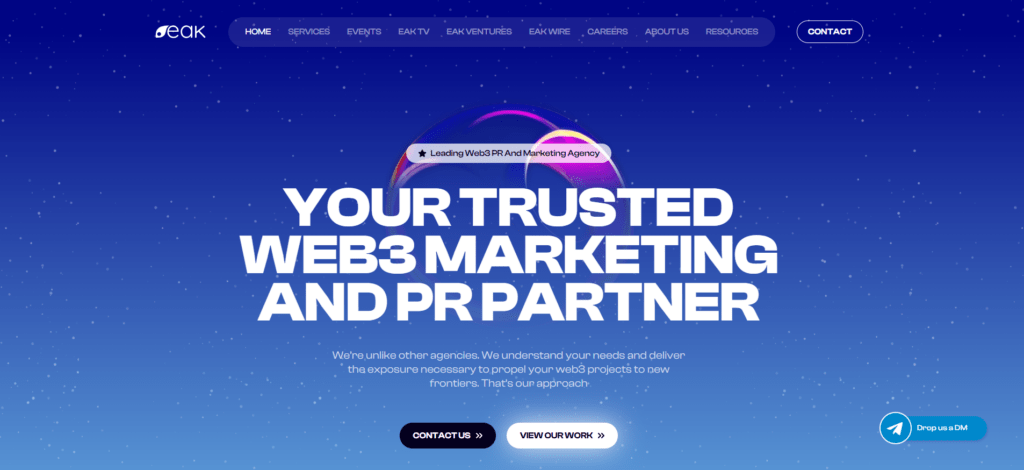
Best for: Full-funnel NFT marketing and Web3 brand building
Eak Digital is a specialist Web3 and NFT marketing agency known for its data-driven, community-first approach. From nft seo and content strategy to influencer networks and Discord growth, Eak Digital offers end-to-end nft marketing and promotion services tailored to both indie creators and enterprise-level launches. Their team combines deep blockchain knowledge with proven digital marketing execution—making them a top choice for projects that want both hype and sustainability.
Services: NFT SEO, Community Management, Influencer Marketing, NFT Ads, Social Media Strategy, PR & Media Outreach
🔗 Get in Touch with Eak Digital ← (Insert your CTA link here)
2. Coinbound
Best for: Crypto and NFT influencer marketing One of the most recognized names in crypto marketing, with a vetted network of KOLs and content creators specializing in NFT promotion.
Coinbound is a crypto marketing agency with a strong NFT track record, having worked with projects like Gala and MetaMask. Their influencer network and combined PR + community + paid media capability make them a strong option for collections targeting broad crypto-native audiences with significant budgets.
3. Guild.xyz
Guild.xyz is the leading token-gated community infrastructure platform, enabling collections to build role-based access for holders across Discord and other platforms with wallet verification. Essential for any collection building token-gated holder benefits.
4. Collab.land
Collab.Land provides wallet verification and token-gating for Discord servers, giving holders exclusive role-based access and enabling the holder-only channels that are standard in well-run NFT communities.
5. Coinzilla
Coinzilla is the largest crypto-native display advertising network, offering targeted NFT ads placement across crypto media, wallets, and blockchain platforms. The primary paid display channel for NFT campaigns operating outside Google and Meta.
6. NFTCalendar
It is the most widely used NFT launch calendar platform, providing collection listings that drive organic discovery from collectors actively researching upcoming drops. A basic but high-value nft promotion service for any upcoming launch.
7. Rarity Sniper
It is a rarity ranking and NFT discovery platform used by serious collectors to evaluate collections pre-mint. Getting listed and optimising your collection’s presentation on Rarity Sniper reaches high-intent buyers who are actively in discovery mode.
8. Mintplex
It provides white-label NFT storefront and minting page infrastructure with built-in analytics, allowing collections to track conversion rates, wallet connection behaviour, and traffic source performance during mint.
9. Luna PR
It is a global nft promotion service and PR agency with particular strength in Middle Eastern, Asian, and multilingual markets. Their international reach makes them relevant for collections targeting global collector bases beyond North American and European audiences.
10. Premint
It is the leading whitelist management platform, enabling collections to design whitelist campaigns with custom entry requirements, manage registrations, and verify wallet eligibility. The standard tool for structured whitelist operations in 2026.
Conclusion
The collections that build lasting value in 2026 are not the ones with the most ambitious roadmaps or the largest influencer budgets. They are the ones that treated NFT marketing as a sustained, multi-phase discipline — building story and community foundation before launch, coordinating maximum effort during the launch window, and investing in holder engagement and brand development long after the mint closes.
A complete NFT marketing strategy covers story architecture, community building, influencer seeding, NFT SEO, NFT advertising on crypto-native channels, coordinated launch activation, and professional post-mint community management. Every phase is necessary. The projects that invest in all of them consistently outperform those that focus exclusively on launch-day hype.
The tools, channels, and services exist to execute this at any budget level. What separates successful collections from failed ones is the discipline to start early, execute consistently, and treat holders as the long-term stakeholders they are — not as a one-time audience to be converted and forgotten.
Related Reading
- NFT Marketing Agency: How Agencies Scale NFT Brands, Artists & Collections
- NFT Press Release in 2026: What Journalists Will (and Won’t) Cover Anymore
- Crypto Community Management Services: Build a Loyal Web3 Audience in 2026
- Blockchain Marketing Firm: How Firms Promote Tokens, NFT Projects & Web3 Brands
Frequently Asked Questions
What is NFT marketing?
NFT marketing is the set of strategies and channels used to promote an NFT collection to potential collectors — covering community building, social media, influencer outreach, paid advertising, press coverage, and SEO — across the full lifecycle from pre-launch through post-mint community retention.
What is the most effective NFT marketing strategy in 2026?
The most effective NFT marketing strategy integrates community building, KOL seeding, earned media PR, NFT SEO, crypto-native paid advertising, and post-mint holder engagement into a coordinated campaign that begins 8–12 weeks before launch and continues indefinitely after mint.
What are the best platforms for NFT advertising?
Crypto-native display networks like Coinzilla and Bitmedia, X (Twitter) promoted posts targeting NFT collector audiences, NFT marketplace featured placements on OpenSea and Blur, and retargeting campaigns for whitelist members and website visitors are the most effective NFT ads channels in 2026.
What is NFT SEO and why does it matter?
NFT SEO is the practice of optimising a collection’s website, content, and marketplace listings to rank in organic search results for queries relevant to potential collectors. It builds long-term organic discovery that reduces dependence on paid channels and influencer attention cycles, and generates backlinks from press coverage that compound domain authority over time.
How early should I start NFT marketing before launch?
Begin 8–12 weeks before your planned mint date. The pre-launch period is when community foundation, Discord infrastructure, social channel presence, influencer relationships, and initial press outreach should all be established. Starting two weeks before launch leaves no time to build the trust signals that drive mint conversion.
How much does NFT marketing cost?
Costs vary widely. A basic DIY programme using community management tools, NFTCalendar listings, and owned social channels can operate for a few thousand dollars monthly. Full-service agency campaigns — covering PR, influencer outreach, paid media, community management, and SEO — typically range from $5,000 to $25,000+ per month depending on collection scale and campaign scope.
What is an NFT promotion service?
An nft promotion service is any platform, agency, or tool that helps increase the visibility of an NFT collection to potential collectors — including calendar listings, influencer campaigns, paid advertising networks, press distribution, and community growth services.
Does Eak Digital provide NFT marketing services?
Yes. Eak Digital provides full-scope NFT marketing — including PR via Eakwire, influencer and KOL campaigns, community management, crypto-native paid advertising, and NFT SEO — for collections, digital artists, and Web3 brands at all stages of development.